




If you’ve ever felt slightly uncomfortable when your dog greets you — or a guest — by sniffing around the lower body, you’re not alone. Many pet owners wonder why dogs do this and whether it’s normal.
The truth is, this behavior is completely natural and instinctive for dogs. It’s not about manners — it’s about communication, scent, and understanding the world through their powerful sense of smell.
Let’s explore what’s really happening when your dog sniffs near your private areas and what it says about their instincts and connection with you.
1. Dogs Rely on Scent to Gather Information
A dog’s sense of smell is thousands of times stronger than that of humans. They use scent to learn about people, animals, and environments around them.
When a dog sniffs near your lower body, it’s not trying to be rude — it’s simply investigating an area rich in natural scent markers.
Just as humans might shake hands or say hello, dogs use scent to recognize and identify you.
2. They’re Detecting Natural Chemical Signals
Humans release subtle chemical compounds called pheromones, which dogs can easily detect.
These pheromones carry information about a person’s mood, stress level, health condition, and even hormonal changes.
Because these natural signals are concentrated in certain areas of the body, dogs instinctively sniff there to better understand how you’re feeling or who you are.
This explains why dogs sometimes react differently to people who are nervous, sick, or experiencing hormonal changes — their noses can literally smell the difference.
3. Dogs Use Scent to Build Familiarity and Trust
When dogs sniff you, especially in areas that carry strong scent cues, they are trying to build familiarity and trust.
It’s their way of saying, “I know you.”
This behavior is particularly common in new dogs getting to know their owners or guests. Once they’ve memorized your scent, they may greet you with less intensity the next time — because they already recognize you.
4. Hormonal Changes Attract Their Attention
Dogs are very sensitive to changes in body chemistry.
Pregnancy, menstruation, or certain medications can cause hormonal shifts that subtly change a person’s natural scent.
Your dog isn’t being inappropriate — they’re simply detecting a difference and investigating out of curiosity. It’s one of the many ways dogs notice things that humans often overlook.
5. They’re Using Their “Jacobson’s Organ”
Dogs have a special organ called the Jacobson’s organ (or vomeronasal organ) located inside their nasal cavity.
This organ allows them to detect pheromones and other chemical cues in incredible detail — far beyond human capability.
When they sniff close to certain areas, they’re actually using this special sense to process complex information, such as identifying another dog’s gender, age, or reproductive status. In humans, it works similarly — it helps them interpret emotional or biological cues from people they care about.
6. It’s a Normal Greeting Behavior Among Dogs
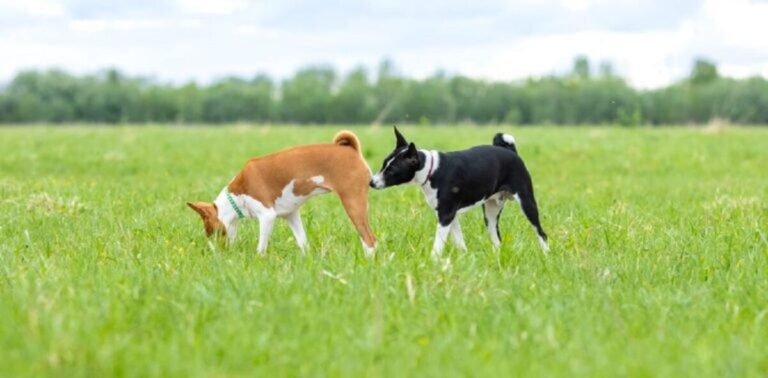
In the canine world, sniffing another dog’s rear is the equivalent of a handshake or polite greeting.
So, when dogs do something similar with humans, they’re simply showing social behavior that’s natural to them.
They’re not being disrespectful — they’re doing what dogs have always done to communicate and understand the beings around them.
7. They May Be Checking on Your Health
Believe it or not, dogs can detect illnesses such as diabetes, infections, and even some forms of cancer through scent.
If your dog suddenly becomes extra interested in sniffing around your body — especially if this behavior is new — it might be their way of picking up on subtle changes in your scent that relate to your health.
Many trained medical dogs use this exact instinct to alert people to medical conditions or changes in blood sugar levels.
8. How to Gently Redirect the Behavior
If you find this behavior embarrassing or uncomfortable — especially when guests are around — you can gently train your dog to redirect its curiosity.
Here’s how:
Stay calm and neutral. Don’t punish your dog; they won’t understand why you’re upset.
Offer a hand or toy instead. Encourage them to sniff your hand or a familiar object when greeting you.
Use basic commands like “sit” or “stay” when meeting new people to guide proper social behavior.
Over time, your dog will learn more polite ways to say hello without losing its natural curiosity.
9. Why You Shouldn’t Be Alarmed
It might feel awkward, but this behavior is a normal part of canine communication.
Dogs experience the world primarily through scent, and what seems inappropriate to humans is, for them, just information gathering.
Understanding that can help you respond with patience and perspective — and even appreciate just how intelligent and observant dogs really are.
Final Thoughts
Dogs don’t judge or act with human social norms — they rely on their noses to navigate relationships and emotions.
When your dog sniffs around your lower body, it’s not being rude or odd; it’s following millions of years of instinct designed to help it understand and connect with others.
The best way to handle it is calmly, with gentle redirection if necessary. In the end, it’s simply another reminder of how deeply intuitive and emotionally intelligent dogs can be — and how much they use scent to bond with the humans they love.